Do you remember the soft, warm glow that seemed to breathe life into your grandparents’ living room, where light danced gently across the walls? That quiet magic wasn’t just nostalgia-it was the effect of well-placed light, thoughtfully arranged. Today, achieving that same ambiance doesn’t require vintage lamps alone, but a mindful approach to where and how you place them. A single decorative crystal lamp, carefully positioned, can transform a space with timeless radiance. The key isn’t just the object itself, but the art of placement-how it interacts with shadow, texture, and architecture to create something more than illumination: atmosphere.
Elevating forgotten corners with crystal lighting
The art of illuminating dark alcoves
Alcoves and narrow recesses often fade into obscurity-spaces we furnish incidentally, if at all. Yet these overlooked areas hold quiet potential. Placing a crystal lamp within one turns an unused nook into a luminous feature. The hand-cut facets refract light in unexpected directions, casting intricate patterns across textured walls or wood panelling. The interplay between geometric precision and organic surfaces brings depth to otherwise flat corners. Interiors gain a distinctive character when you incorporate a decorative crystal lamp into your furniture arrangement.
- Set on a deep window sill to capture and amplify exterior reflections during twilight
- Positioned within a bookshelf to highlight the spines of books and add vertical glow
- Placed on a low pedestal in a hallway corner to anchor the space visually
- Paired with a mirror to double the brilliance and create an illusion of space
These placements do more than brighten-they draw the eye, soften transitions, and invite lingering glances. A well-placed lamp becomes a quiet punctuation mark in the rhythm of a room.
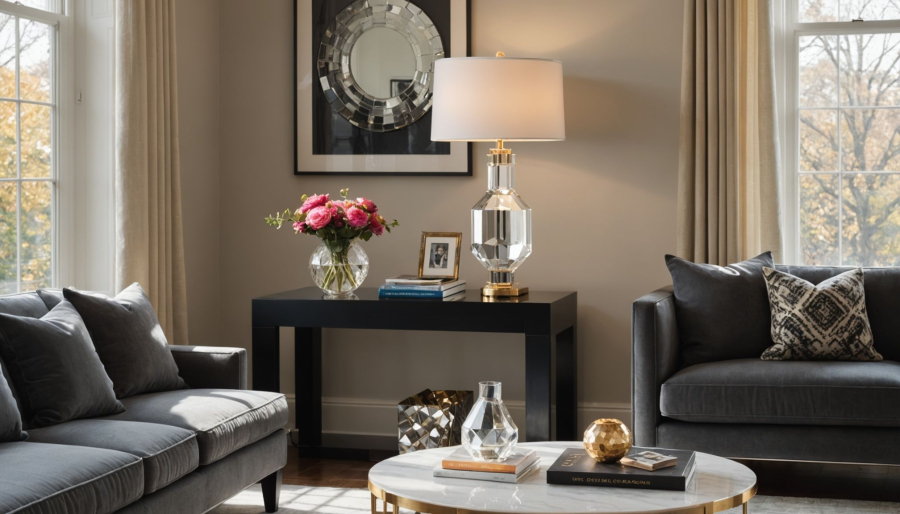
Comparing crystal lamp effects by room type
Adapting luminosity to room functions
Not all rooms demand the same light. A study calls for clarity and focus, while a dining space benefits from warmth and intimacy. This is where dimmable lighting proves essential. A crystal lamp with adjustable output allows one piece to serve multiple moods-crisp illumination for reading, then a gentle wash for conversation. The natural clarity of hand-cut crystal interacts beautifully with warm-toned light, enhancing sparkle without glare.
Height and proportion considerations
Scale matters. A lamp too tall on a nightstand imposes itself; one too short on a sideboard disappears. As a rule, the bottom of the lampshade should sit roughly at eye level when seated nearby-around 58 to 60 inches from the floor for bedside tables. In contrast, a low console in a hallway may suit a shorter silhouette, where the light serves more as accent than task.
| Room Type | Ideal Placement | Visual Benefit |
|---|---|---|
| Entryway | On a console table near the wall | Creates a welcoming glow with 360-degree refraction |
| Dining Room | On sideboards or as part of a centerpiece | Reflects candle-like warmth across polished surfaces |
| Bedroom | On nightstands or dressers | Provides soft, localized light without disrupting sleep |
| Home Office | On a desk or side table near seating | Balances task lighting with ambient elegance |
Strategic placement for architectural impact
Creating a focal point on mantels
A fireplace mantel offers one of the most powerful stages for crystal lighting. Placing a pair of lamps symmetrically draws balance and elegance into the room. The soft heat from occasional fires doesn’t affect hand-blown crystal, but the ambient warmth enhances the sense of comfort. When lit, the facets scatter light across the hearth and surrounding walls, reinforcing the hearth as the heart of the room.
The center table statement
In foyers or wide landings, a single crystal lamp on a central table commands attention. Unlike directional fixtures, high-quality crystal emits light in all directions, turning the object into a three-dimensional beacon. The effect is especially striking when the lamp sits atop dark wood or marble, creating contrast that emphasizes both material and glow.
Layering light with existing fixtures
A crystal table lamp should never stand in isolation. It works best when layered with overhead lighting or wall sconces. This layering builds depth-ambient light from above, accent from the sides, and the focused sparkle of crystal at eye level. The result is a room that feels inhabited, dynamic, and rich in texture, avoiding the flatness of single-source illumination.
Practical tips for crystal lamp maintenance and safety
Preserving the brilliance of the glass
Hand-cut crystal rewards care. Dust regularly with a soft, lint-free cloth-microfiber works well. Avoid abrasive cleaners or rough sponges, which can scratch delicate surfaces over time. For deeper cleaning, a mixture of distilled water and a drop of mild soap, applied with a cotton pad, followed by immediate drying, preserves clarity without residue. Frequent dusting is essential; even fine particles can dull the light refraction that makes crystal special.
Cable management in luxury decor
Even the most elegant lamp can be undermined by a snaking cord. Use clear adhesive clips to guide wiring along baseboards or behind furniture. If your table has a grommet, thread the cord through-it’s a small detail that elevates the whole look. For high-traffic areas, consider lamps with shorter cords or built-in cord channels.
Choosing the right bulb temperature
Not all bulbs are equal when paired with crystal. Warm white bulbs around 2700K complement the natural warmth of hand-blown glass, enhancing its clarity and fire. Avoid cool, blue-toned LEDs-they wash out the nuances of the cut and create a sterile atmosphere. Opt for dimmable LEDs to maintain flexibility and preserve the luminous ambiance over time.
Conclusion: The quiet power of placement
Where you place a crystal lamp is far more than decorative instinct-it’s an act of curation. The same piece can feel ordinary in one corner, extraordinary in another. The difference lies in understanding how light moves, how materials interact, and how human sight follows glow. From the heritage of artisanal craftsmanship to the subtleties of interior harmony, every detail contributes to a larger effect: spaces that feel lived-in, yet refined. Thoughtful lamp placement doesn’t just illuminate a room-it completes it. It’s not about filling empty surfaces, but about creating moments of pause, where light catches the eye and holds it, just for a second. That’s where elegance lives: in the quiet reflection of a well-placed glow.
